What Compute Sovereignty Means for the Next Generation of Defense AI
As national security AI programs scale, where compute lives and who controls it is becoming as strategic as the software running on it.
A new class of company is emerging across the national security AI landscape. These companies are not just writing the models; they are securing the physical infrastructure those models need to run without depending on a shared, third-party cloud region. Palantir, Anduril, and a growing group of defense-tech firms treat compute infrastructure as core strategy, not something to sort out after the software ships.
That points to where the real bottleneck in defense AI is moving: from the model to the physical infrastructure underneath it.
Colovore has spent over a decade building compliance-ready, high-density colocation for workloads that cannot run in shared, best-effort environments. These are the kinds of environments defense and national security AI programs increasingly require.
The Infrastructure Race Is Also a Physical One
Palantir and NVIDIA launched a sovereign AI data center reference architecture in 2026, built as a turnkey solution for governments with strict requirements on data sovereignty, security, and performance, covering everything from hardware to application deployment. Palantir and Anduril also formed a consortium around a simple idea: keeping the U.S. government ahead on AI requires infrastructure “from the edge to the enterprise,” not just better models. The same architecture is now expanding into government partnerships across EMEA, which tells you this isn't a U.S.-only pattern.
The common thread: these are infrastructure plays as much as software plays. A contractor with great AI software running on someone else's shared cloud hasn't actually solved the sovereignty problem the government is paying for.
Why Speed to Power Decides Who Leads
Infrastructure decisions in government and defense have the same long life they do everywhere else, except getting them wrong costs program delays and re-accreditation, not just budget overruns. Hyperscale buildouts typically take three to five years. Defense programs increasingly can't wait that long.
The window is closing. FedRAMP's 2025 AI Prioritization Initiative, the fast-track path for AI cloud offerings, ran from August 2025 to April 2026 and is now closed to new entrants. Anyone who missed it is back on the standard timeline.
Compliance is tightening at the same time. CMMC requirements began phasing into eligible Department of Defense contracts in November 2025. Phase 2 is scheduled to begin in November 2026 and will expand third-party assessments for applicable Level 2 contractors.
Tens of thousands of defense industrial base organizations are expected to fall within CMMC Level 2, which is based on the 110 security requirements in NIST SP 800-171. Waiting until a program requires compliant infrastructure means standing up authorization and physical capacity on a timeline that no longer fits the pace of the work.
Where It Shows Up First
The gap between FedRAMP authorization and DoD Impact Level authorization is where most infrastructure decisions go wrong. IL5 builds on FedRAMP High with added DoD controls. IL6 supports classified information up to the SECRET level and requires infrastructure that satisfies DoD requirements for classified workloads, including strict physical, personnel, network, and operational controls.
This is where marketing and reality diverge. Hyperscalers are pushing “sovereign AI regions” as the answer. For workloads subject to IL5, IL6, or CMMC requirements, sovereignty can require more than data-residency commitments. Depending on the program, it may require dedicated infrastructure, clearly defined operational control, physical transparency, and architectures capable of meeting specific isolation requirements. That's exactly why the Palantir and NVIDIA reference architecture exists: it reflects the growing demand for dedicated infrastructure designed around sovereignty, security, and performance requirements.
The workloads hitting this first are closest to the mission: edge and tactical AI, ISR data fusion, logistics, and cyber defense. All of them need to run close to the decision and be inspectable end to end, not routed through a shared global region picked for its elasticity.
Why This Decision Is Hard to Reverse Later
An Authority to Operate isn't paperwork that catches up with the technology later. It's the gate the technology has to pass through before touching a live program. Infrastructure chosen for cost or convenience instead of IL5, IL6, or CMMC Level 2 readiness doesn't just slow that gate down. It can require a re-accreditation: re-running the whole approval process against infrastructure that has to change to pass it.
That's a bigger cost than a commercial cloud migration. A company re-platforming a workload loses engineering time. A government program working through re-accreditation loses time on a timeline set by an authorizing official, increases contract risk, and in some cases requires a full re-procurement.
With CMMC 2.0 already phasing in and roughly 80,000 companies in scope, this consideration reaches well past the largest primes and into the subcontractor base evaluating AI infrastructure for the first time, under a compliance clock that didn't exist two years ago.
What Leadership Looks Like Right Now
The fastest-moving defense AI organizations are applying a lesson other regulated industries already learned: the leaders in a mission-critical field apply the same infrastructure discipline to AI they already apply to their core systems. Just as JPMorgan and Jane Street decided AI inference belonged on infrastructure they controlled directly, the most capable defense-tech firms are building or partnering on dedicated compute instead of relying on multi-tenant cloud, even the kind marketed as government-ready.
What Colovore Provides
Compliance built in from the start. Colovore's Chicago campus is ISO/IEC 27001 certified and has completed a SOC 2 Type II examination, with facility and operational controls designed to support customers pursuing PCI DSS and FedRAMP-aligned deployments. HITRUST scope is planned for Q4 2027. A facility that's compliance-ready by design shortens the path to IL5 and IL6-aligned deployments instead of lengthening it.
Hardware neutrality with physical isolation. Colovore supports NVIDIA, AMD, and other architectures in the same facility, so a contractor isn't locked to one vendor's roadmap for a program that could run for years past the hardware it started on.
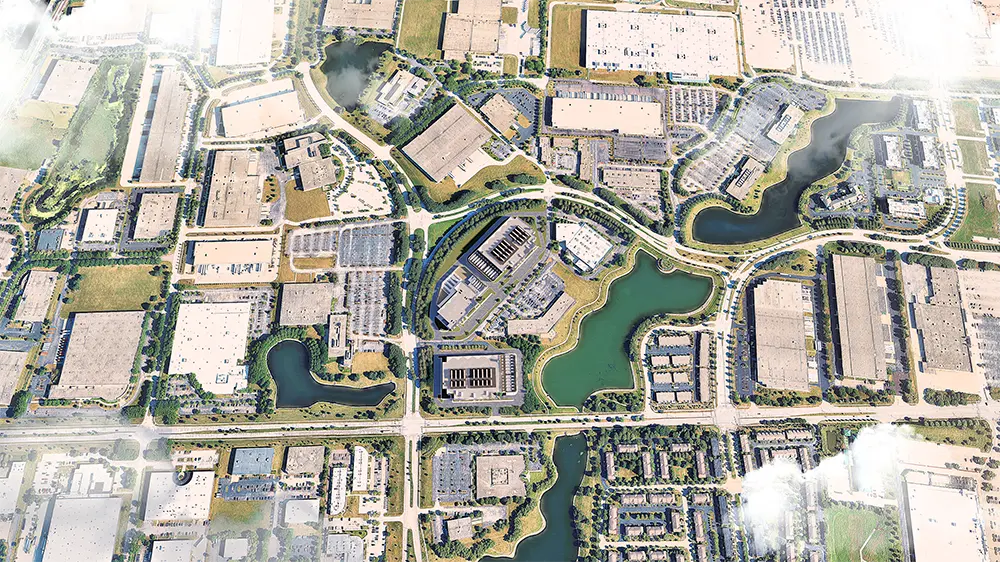
Speed that matches program timelines. Colovore's Chicago campus is scheduled to bring its first hall online in December 2026, with 54MW planned through 2028. It is built for programs that can't wait three to five years.
A location that matters. Chicago is one of the country's major interconnection and logistics hubs, a natural fit for defense workloads that need low-latency access to the broader infrastructure the mission depends on.
Why Timing This Decision Matters
The contractors and agencies treating infrastructure sovereignty as a strategic asset now, rather than a checkbox for later, are the ones positioned to lead the next generation of national security AI programs. Capacity in the right locations, with the right compliance posture already built in, takes time to secure. The organizations that started that process early are simply further along.
This post is part of Colovore's ongoing series on the coming AI inference divide, the structural shift separating where AI is trained from where it runs in production at enterprise scale.
Read: The AI Infrastructure Decisions That Shape 2030
For the full analysis, including industry-specific use cases and the specialized silicon landscape, download the complete strategy paper.
Sign up for updates straight to your inbox
By subscribing you agree to with our Privacy Policy and provide consent to receive updates from our company.
Latest articles